
Understanding the calculation of BMI enables you to interpret your results with greater confidence. The formula is simple and can be computed manually, although utilizing an online BMI calculator is significantly quicker and less susceptible to human error.
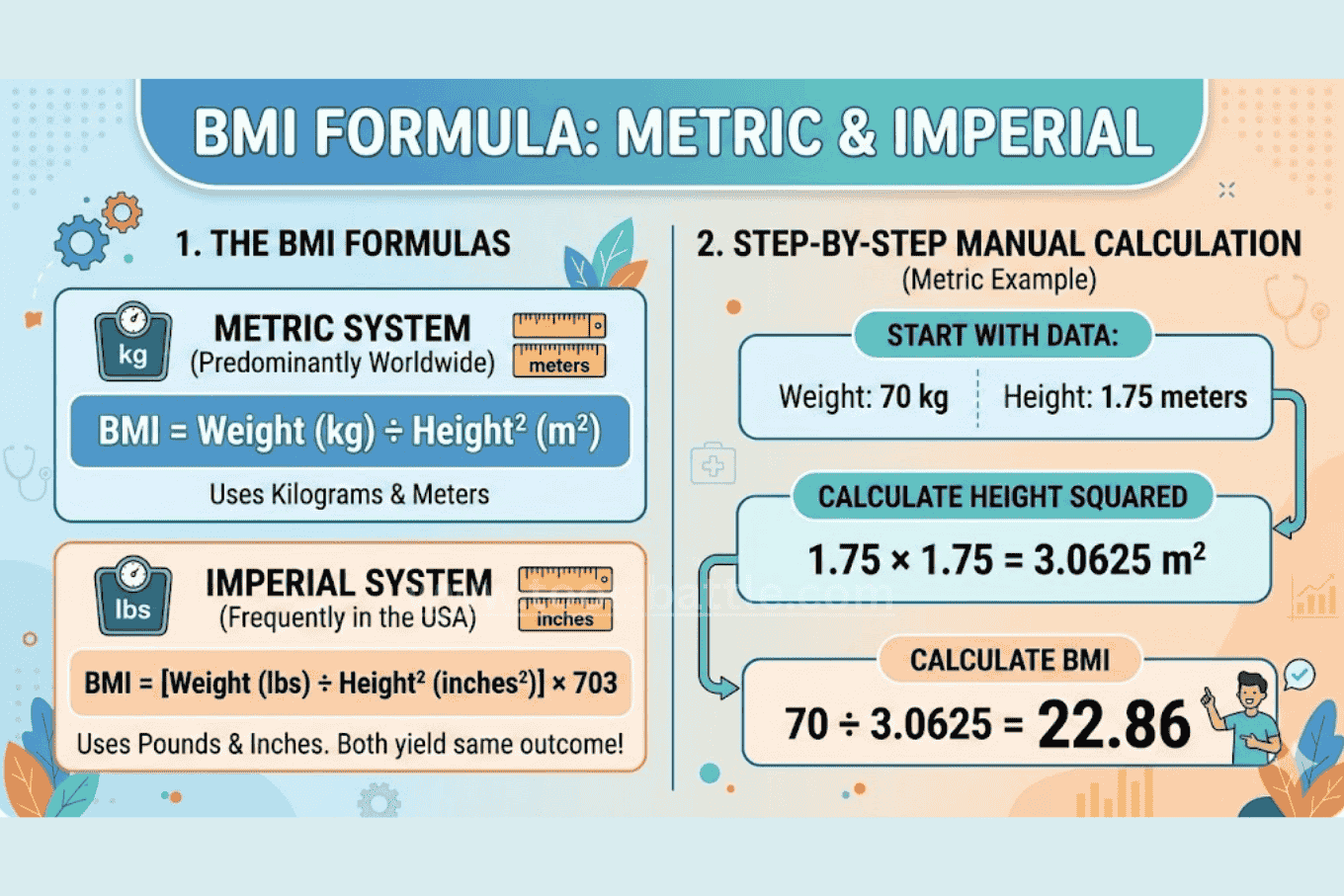
Both formulas yield the same outcome — the only distinction lies in the unit system employed. The metric system is predominantly used worldwide, whereas the imperial formula is frequently utilized in the United States.
Let us examine a practical example using the metric formula:
A BMI of 22.86 is categorized within the Normal/Healthy Weight range (18.5 – 24.9). This individual maintains a healthy weight in relation to their height.
Online BMI calculators streamline this formula by prompting you to enter your weight and height. Some sophisticated calculators may also request your age and gender to deliver a more customized result. After you click ‘Calculate,’ the tool promptly computes your BMI and assigns you to the relevant weight category. This process eliminates errors associated with manual calculations and makes it accessible to all, irrespective of their mathematical abilities.
Calculating BMI manually, particularly using the imperial system, can be complicated and susceptible to mistakes. In contrast, an online BMI calculator executes the calculations quickly and accurately. Furthermore, many of these calculators offer supplementary information such as your ideal weight range, tracking of BMI history, and comparisons of average BMI values based on age and gender — tasks that are challenging to accomplish manually
The World Health Organization categorizes adult BMI into four main groups. Recognizing the category you belong to is the initial step in making well-informed health choices.
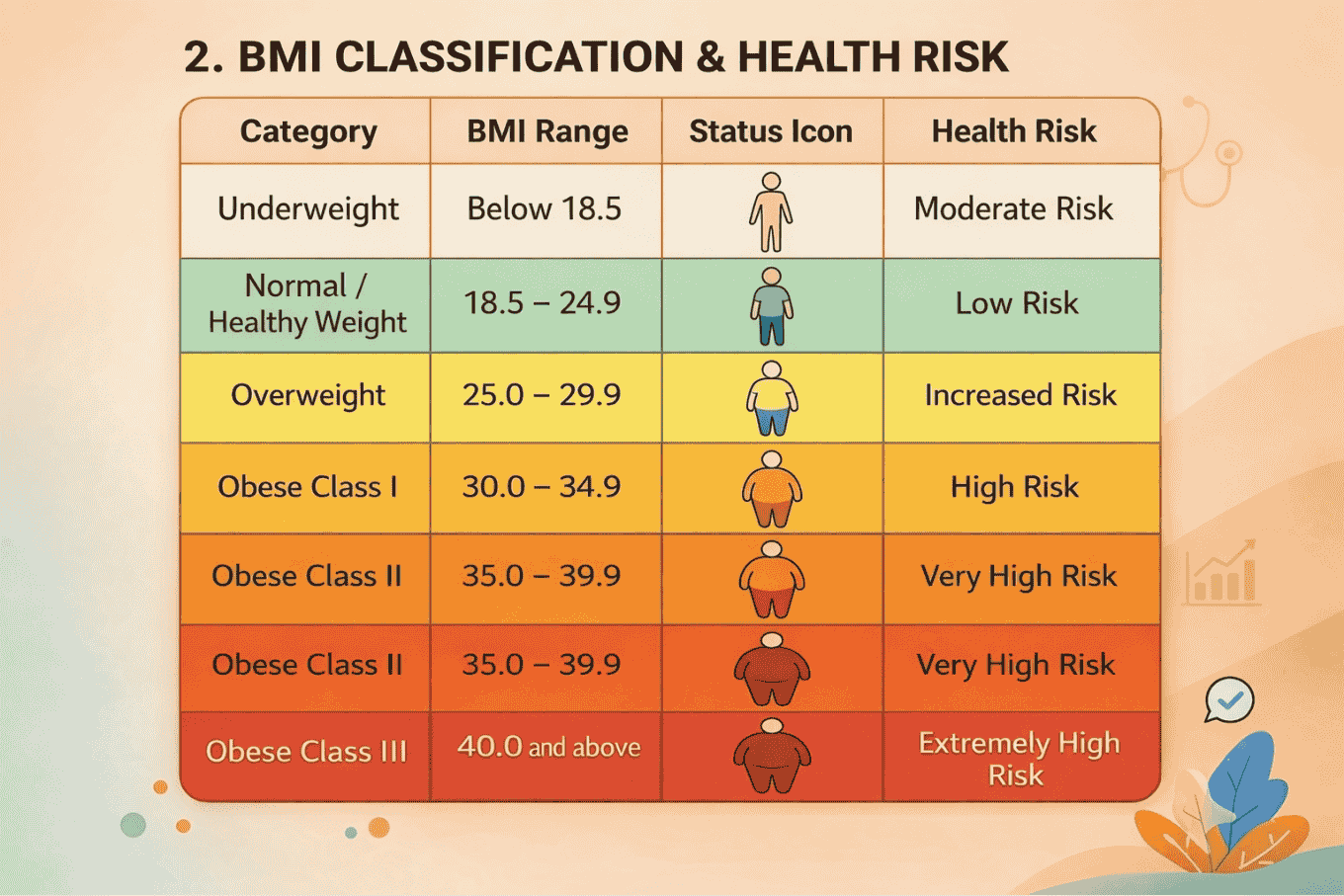
Category | BMI Range | Health Risk |
Underweight | Below 18.5 | Moderate Risk |
Normal / Healthy Weight | 18.5 – 24.9 | Low Risk |
Overweight | 25.0 – 29.9 | Increased Risk |
Obese Class I | 30.0 – 34.9 | High Risk |
Obese Class II | 35.0 – 39.9 | Very High Risk |
Obese Class III | 40.0 and above | Extremely High Risk |
Being underweight indicates that your body might not be receiving sufficient nutrients for proper functioning. This deficiency can result in a weakened immune system, bone deterioration, anemia, and fatigue. Common factors contributing to this condition include inadequate diet, underlying health issues, or eating disorders.
A BMI within this range signifies that your weight is appropriate for your height and is linked to the lowest health risks. Nevertheless, it is crucial to sustain this range through a balanced diet and consistent physical activity, rather than merely focusing on achieving a low number on the scale.
Being classified as overweight heightens your likelihood of developing high blood pressure, type 2 diabetes, and heart disease. Individuals in this category may find that modest lifestyle modifications, such as enhancing their diet and increasing physical activity, can be beneficial.
Obesity is divided into three categories. Class I (30–34.9) presents a high health risk. Class II (35–39.9) poses a very high risk. Class III, often referred to as morbid or severe obesity (40+), is linked to an extremely high risk of serious health issues and may necessitate medical intervention. All three categories can greatly benefit from lifestyle adjustments, and Classes II and III may also require clinical assistance.
For adults, the categories of BMI utilize fixed ranges as illustrated above. In contrast, for children and teenagers (ages 2–19), BMI is assessed in a different manner. Rather than employing fixed cutoffs, pediatric BMI relies on age- and sex-specific percentiles due to the changes in body composition that occur as children develop. A child’s BMI is evaluated against peers of the same age and sex, with results presented as percentile rankings instead of straightforward categories.
Utilizing a BMI calculator is straightforward, quick, and does not necessitate any prior medical expertise. Below is a comprehensive guide on how to obtain the most precise and beneficial results from any BMI calculator tool.
The majority of BMI calculators require at least your height and weight. More sophisticated calculators may also ask for your age and gender, enabling the tool to offer more personalized insights and to compare your BMI against demographic averages.
Upon receiving your BMI value, locate it within the BMI category table provided above to grasp its significance. It is important to note that BMI serves as a screening tool rather than a definitive diagnosis. A result that falls outside the normal range indicates a need for increased attention to your health; however, it does not imply the presence of a disease. Utilize this information as encouragement to seek a comprehensive health evaluation from a healthcare professional.
If you reside in the United States, you are likely more accustomed to using pounds and inches. Conversely, in most other regions of the world, kilograms and centimeters are more commonly used. An effective BMI calculator should provide both measurement systems. Always verify which unit system is currently selected prior to inputting your data to ensure accurate results.
While the standard formula for calculating BMI remains consistent across the population, the interpretation of the results can differ based on factors such as age, gender, and life stage. Recognizing these distinctions enables more effective use of BMI as a tool for health monitoring.
Men generally possess a greater muscle mass and denser bones compared to women, which can lead to the same BMI score indicating varying body compositions. A man with a significant muscle percentage may find himself categorized as overweight according to BMI, despite not having an excess of body fat. This illustrates the importance of considering BMI in conjunction with other health metrics. For the majority of men, a BMI ranging from 18.5 to 24.9 is deemed healthy, with optimal cardiovascular health often linked to a BMI between 20 and 25.
Women inherently have a higher body fat percentage than men, which is crucial for maintaining hormonal health and reproductive functions. Consequently, the same BMI value for a woman may indicate a greater body fat percentage than it would for a man. Nevertheless, the standard BMI categories are applicable to both genders in most clinical contexts. Women experiencing hormonal fluctuations — such as those occurring during menopause — may observe changes in their BMI even without significant alterations in their diet, due to variations in fat distribution.
As previously noted, BMI for children is represented as a percentile. The following outlines how to interpret pediatric BMI percentiles:
It is essential that pediatric BMI is evaluated by a pediatrician, who can take into consideration the child’s growth stage, developmental history, and overall health.
For elderly individuals, the conventional BMI classifications may not be completely precise. As individuals age, they tend to experience a decrease in muscle mass and bone density, which can lead to a lower BMI even when body fat levels are comparatively high — a phenomenon referred to as sarcopenic obesity. Some studies indicate that a marginally elevated BMI (approximately 25–27) could be beneficial for older adults, as it may lower the risk of frailty and malnutrition. It is essential for seniors to collaborate with their healthcare provider to understand BMI in relation to their overall health.
Standard BMI assessments are not suitable during pregnancy since weight gain is anticipated and essential for the healthy development of the fetus. Expectant mothers should refrain from utilizing a standard BMI calculator to evaluate their health. Instead, they should follow the pregnancy weight gain recommendations from the Institute of Medicine (IOM), which differ according to pre-pregnancy BMI. It is always advisable to seek guidance from an OB-GYN regarding weight management during pregnancy.
While BMI serves as a valuable screening instrument, it possesses several well-established limitations that are crucial to comprehend. Solely depending on BMI to evaluate your health may result in misleading interpretations.
BMI is a calculation of weight in relation to height — nothing beyond that. It does not provide insight into the proportion of your weight that is fat compared to muscle, bone, water, or organs. Two individuals with identical BMI values can exhibit significantly different body compositions. This represents perhaps the most critical limitation of BMI as a health indicator.
An individual with substantial muscle mass — such as an athlete, bodybuilder, or personal trainer — may fall into the overweight or obese category according to BMI, despite possessing very low body fat and outstanding cardiovascular health. This discrepancy arises because muscle is denser than fat. For this demographic, BMI considerably exaggerates health risks.
Studies have indicated that the health risks linked to specific BMI ranges vary among different ethnic groups. For instance, individuals of Asian descent are prone to developing weight-related health issues at lower BMI thresholds. The World Health Organization has recognized these variations, and some nations have implemented adjusted BMI cutoffs for Asian populations. In contrast, individuals from certain African descent populations may exhibit greater muscle mass and bone density, rendering standard BMI cutoffs less reliable indicators of health risk.
As mentioned in the preceding section, BMI is neither a dependable nor an appropriate indicator of health during pregnancy. Gaining weight during this time is typical, anticipated, and essential — an increasing BMI during this phase should never be assessed using standard adult classifications.
Due to its limitations, BMI is most effective when utilized in conjunction with other health indicators such as waist-to-hip ratio, body fat percentage, blood pressure, cholesterol levels, and blood sugar. No single metric provides a comprehensive view of your health, and BMI serves best as an initial reference rather than a conclusive measure.
For a more thorough understanding of your body composition and overall health, there are various other measurement tools that are beneficial to be aware of. Each tool possesses its unique advantages and drawbacks.
Body fat percentage offers a direct measurement of the fat proportion in your body compared to total weight. It serves as a more accurate reflection of body composition than BMI and can distinguish between fat mass and lean mass. Techniques for measuring body fat percentage include DEXA scans, hydrostatic weighing, and bioelectrical impedance analysis (BIA). Although these methods are more precise, they are also costlier and less accessible than a straightforward BMI calculator.
Waist circumference specifically assesses abdominal fat, which is the most hazardous type of fat concerning health risks. According to the WHO, a waist circumference exceeding 94 cm (37 inches) for men and 80 cm (31.5 inches) for women signifies an elevated health risk. Waist circumference is particularly effective in identifying central obesity, a condition that BMI alone fails to recognize.
The waist-to-height ratio (WHtR) is determined by dividing your waist circumference by your height. A ratio lower than 0.5 is typically regarded as healthy, indicating that your waist should be less than half of your height. Some researchers contend that WHtR serves as a superior predictor of cardiovascular risk and metabolic health compared to BMI, particularly for detecting central obesity in individuals of shorter or taller stature.
The waist-to-hip ratio (WHR) assesses the circumference of your waist in relation to your hips. It effectively indicates fat distribution — specifically whether you store more fat around your abdomen (apple shape) or your hips and thighs (pear shape). An apple-shaped fat distribution is associated with greater health risks. According to WHO guidelines, a WHR exceeding 0.90 for men and 0.85 for women signifies abdominal obesity.
The Ponderal Index (PI) resembles BMI but utilizes the cube of height instead of the square (weight in kg divided by height³ in meters). It is generally viewed as a more precise measure for individuals who are very tall or very short, where standard BMI may inaccurately classify weight status. Nevertheless, the Ponderal Index is infrequently employed in clinical settings and lacks the established reference ranges that render BMI so practical.
Your BMI range can serve as a significant early warning indicator for various health conditions. Although BMI alone is insufficient for diagnosing any condition, research consistently associates BMI values outside the healthy range with heightened health risks.
Being underweight is frequently neglected in comparison to concerns regarding overweight; however, it presents its own significant health risks:
Excess weight stands as one of the most critical preventable risk factors for chronic diseases. The health risks linked to being overweight and obese encompass:
The connection between BMI and mental health is intricate and reciprocal. Individuals with obesity are statistically more prone to suffer from depression, anxiety, and low self-esteem — partly as a result of social stigma and discrimination. On the other hand, poor mental health can lead to weight gain through emotional eating, decreased physical activity, and disrupted sleep patterns. Addressing mental health is a crucial aspect of any thorough weight management strategy.
It is advisable to seek the guidance of a healthcare professional if your BMI is below 18.5 or exceeds 30, if your BMI is in the borderline range accompanied by other risk factors such as a family history of diabetes or heart disease, if you have noticed unexplained weight fluctuations, or if you desire a more comprehensive and precise health evaluation that extends beyond BMI alone.
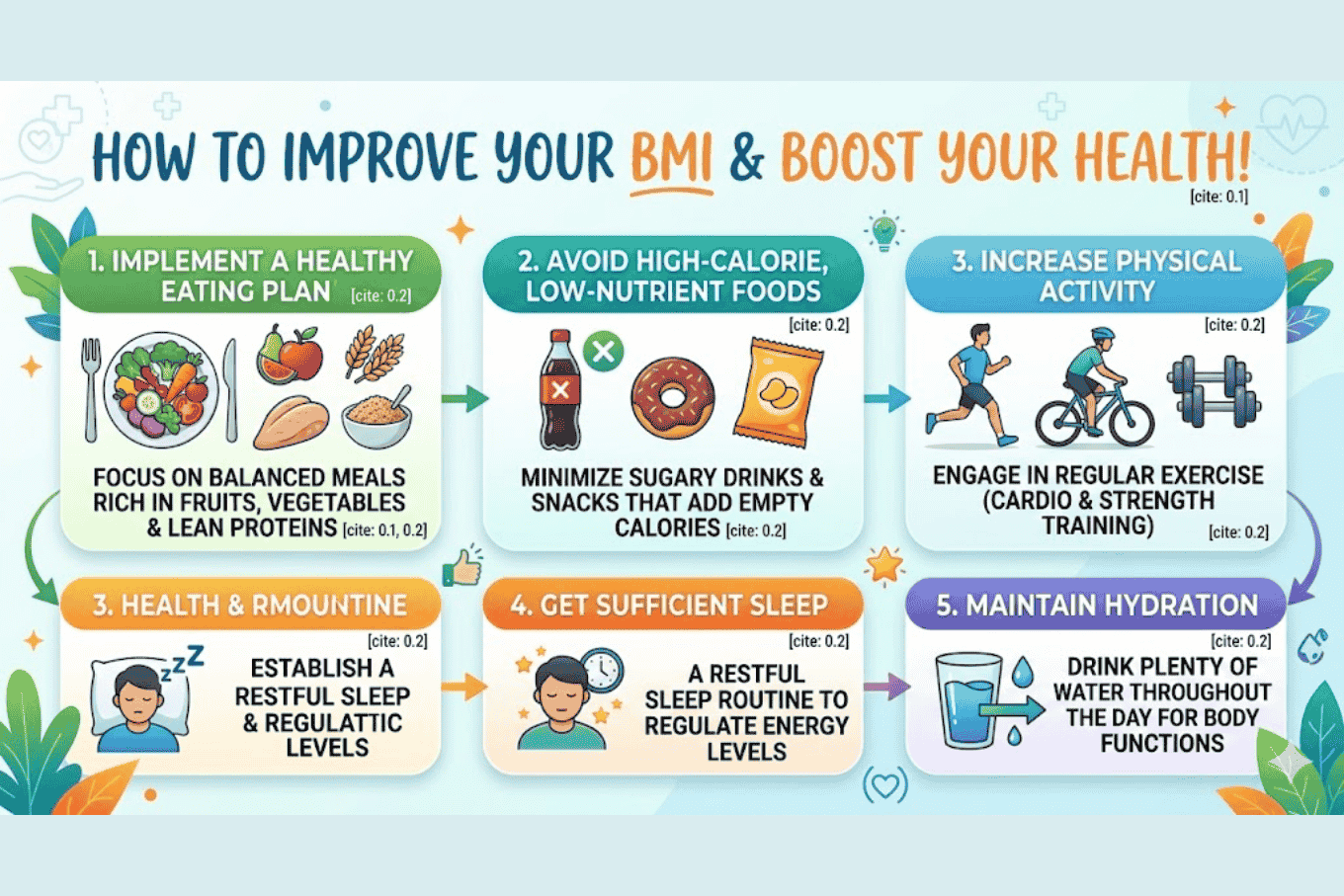
Regardless of whether your BMI is excessively high or low, the objective is to achieve and sustain a healthy weight range through sustainable lifestyle modifications. Below are evidence-based strategies to assist you in this endeavor.
The key takeaway is that sustainable changes are always preferable to quick fixes. Fad diets, extreme exercise regimens, or severe calorie restrictions may yield short-term outcomes but are seldom sustainable and can even be detrimental. Instead, concentrate on gradual and consistent improvement.
A healthy weight loss rate for individuals who are overweight is generally between 0.5 to 1 kilogram (1 to 2 pounds) weekly. Conversely, for those who are underweight, a recommended weight gain rate is typically 0.25 to 0.5 kg per week. By setting realistic and time-specific goals — such as ‘I aim to lose 5 kg in the next 10 weeks’ — you can measure your progress effectively and maintain motivation.
In today’s digital era, numerous tools are available to assist you in tracking your BMI. From basic online calculators to comprehensive health applications, here is essential information you should consider.
A variety of dependable and free BMI calculators can be found online. The National Institutes of Health (NIH), the Centers for Disease Control and Prevention (CDC), and the World Health Organization (WHO) all provide simple and accurate BMI calculators on their respective websites. These tools are perfect for a quick, one-time calculation.
For continuous BMI tracking, mobile health applications offer a more thorough solution. Applications such as MyFitnessPal, Lose It!, and Apple Health enable you to monitor your weight over time, establish goals, log your food intake and exercise, and visualize your progress through charts and graphs. Many of these applications also incorporate BMI calculation and tracking within their extensive health monitoring features.
Certain advanced BMI calculators extend beyond the basic formula to offer further insights. These may include your ideal weight range based on height and gender, BMI percentile in relation to others in your age group, estimated body fat percentage, and links to suggested next steps based on your results. Such enhanced tools are particularly beneficial for individuals seeking actionable advice after determining their BMI.
If you are a health blogger, fitness coach, or the owner of a healthcare website, incorporating a BMI calculator into your site can greatly enhance user engagement and increase the time spent on the page. Numerous free and premium widget options are available that can be easily embedded using a simple code snippet. It is essential to ensure that the calculator you choose to embed is accurate, mobile-friendly, and offers users a meaningful interpretation of their results, rather than merely presenting a raw number.
Your Body Mass Index serves as a significant initial measure in comprehending your health and body weight. It is a straightforward, accessible, and widely acknowledged instrument that can assist you in identifying potential health risks, establishing meaningful objectives, and monitoring your progress over time.
Nevertheless, it is crucial to keep in mind that BMI is merely a starting point — not the ultimate goal. It does not take into consideration muscle mass, fat distribution, age-related changes, or ethnic differences in body composition. Consider your BMI result as one component of a broader health picture, in conjunction with other metrics such as waist circumference, body fat percentage, blood pressure, and cholesterol levels.
Most importantly, irrespective of your current BMI, the advisable direction is towards adopting a healthier, more balanced lifestyle. Minor, consistent enhancements in your diet, physical activity, sleep, and stress management can significantly influence your long-term health — regardless of the number on the scale.
BMI serves as a useful yet imperfect health screening tool. It effectively identifies weight-related health risks at the population level, but it is less precise for individuals—especially those with high muscle mass, older adults, and specific ethnic groups. Consider BMI as one significant data point among many, rather than a conclusive judgment on your health.
For adults of all ages, a BMI ranging from 18.5 to 24.9 is deemed healthy according to global health standards. However, some researchers propose that for adults over the age of 65, a slightly elevated BMI of up to 27 may be acceptable and even beneficial in preventing frailty. For children and teenagers, a healthy BMI is determined by age- and sex-specific percentile charts instead of fixed numerical values.
Yes, BMI can greatly overestimate health risks in individuals with high muscle mass. A professional rugby player or a competitive weightlifter might have a BMI of 28 or above while maintaining very low body fat and outstanding fitness levels. For athletes, metrics such as body fat percentage, fitness assessments, and metabolic health indicators are significantly more informative than BMI alone.
For the majority of adults, monitoring BMI every one to three months is adequate for general health oversight. If you are actively pursuing a weight loss or weight gain objective, tracking your BMI monthly enables you to evaluate your progress without becoming excessively fixated on short-term variations. Weighing yourself daily can be counterproductive, as weight can fluctuate by several kilograms throughout the day due to factors such as hydration, food consumption, and other variables.
BMI can fluctuate with age as a result of changes in body composition, metabolism, and hormonal levels. Many adults tend to gain some weight as they age, even without significant changes in their diet, due to a gradual decrease in muscle mass and metabolic rate. This explains why older adults may present with a higher BMI, even if their lifestyle has not undergone substantial changes. Conversely, very elderly individuals may experience weight loss due to diminished appetite, illness, or side effects from medications.
BMI is a ratio that compares weight to height, providing a rough estimate of whether your weight is suitable for your height. In contrast, body fat percentage directly quantifies the proportion of your total body weight that is composed of fat. BMI is straightforward to calculate without the need for specialized equipment, whereas determining body fat percentage necessitates specific tools or tests. Both measurements are valuable — BMI serves for quick assessments, while body fat percentage offers a more accurate analysis of body composition.